
In today’s digital era, having a professional online presence is not just an option—it’s a necessity. Whether you are a freelancer, a business owner, a blogger, or an entrepreneur, a website can help you connect with your audience, showcase your services, and build trust. Among the various website-building platforms, WordPress stands tall as the most popular Content Management System (CMS). It powers over 40% of all websites worldwide, which clearly shows its popularity and versatility.
If you’re a beginner wondering how to kickstart the process of building your first website with WordPress, this guide will walk you through everything you need to know. From the basics of what WordPress is, to what’s mandatory for deployment (like domain, hosting, and SSL), you’ll get a clear roadmap to launch your first website.
Why Choose WordPress?
When you’re deciding on a platform to build your website, it’s important to choose one that not only meets your current needs but also supports your growth in the future. WordPress has become the preferred choice for individuals, startups, and large enterprises alike because it combines flexibility, ease of use, and reliability. Whether you want to launch a simple blog, showcase your portfolio, or build a full-scale online store, WordPress gives you the foundation to do it all.
Here are some of the main reasons why WordPress is the go-to CMS for millions of users worldwide:
- User-Friendly – WordPress allows even non-technical users to build professional websites without coding knowledge.
- Highly Customizable – Thousands of free and premium themes and plugins are available to extend your site’s functionality.
- SEO-Friendly – WordPress makes it easier to optimize your site for search engines.
- Scalability – From a small personal blog to a large eCommerce store, WordPress can handle it all.
- Strong Community Support – With millions of users worldwide, there’s no shortage of guides, tutorials, and forums to help you.
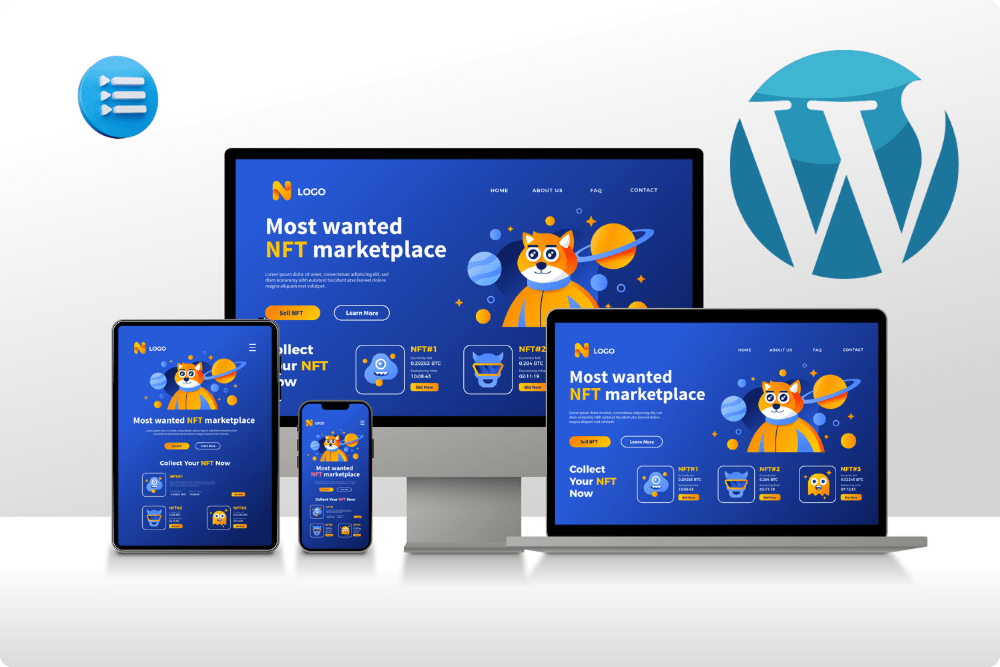
What You Need Before Building a WordPress Website?
Think of creating a website like building a house—you need land, an address, and tools before construction begins. Similarly, here’s what’s mandatory to deploy a WordPress website:
- Domain Name – This is your website’s address (like
mybrand.com). Choose something short, memorable, and brand-friendly. - Web Hosting – Hosting is where your website “lives.” Good hosting ensures your site is fast and reliable.
- SSL Certificate – This secures your website (showing
https://instead ofhttp://). Many hosting companies provide it for free.
At the very minimum, you must have these three things: a domain, hosting, and SSL. Without them, your WordPress site cannot go live.
Beyond these essentials, you’ll also need:
- A theme (controls the look/design).
- A few plugins (add functionality like forms, SEO, and backups).
Kickstarting Your WordPress Website
Now that you know the basics, let’s walk through how to start your first WordPress website. Instead of a long technical checklist, here’s a simple flow to follow:
Step 1: Register Your Domain & Hosting
Choose a domain name that represents your brand or purpose. Hosting providers like Bluehost, SiteGround, or Hostinger often let you buy hosting and a domain together. Pick a beginner-friendly hosting plan that offers one-click WordPress installation and a free SSL certificate.
Step 2: Install WordPress
Choose a domain name that represents your brand or purpose. Hosting providers like Bluehost, SiteGround, or Hostinger often let you buy hosting and a domain together. Pick a beginner-friendly hosting plan that offers one-click WordPress installation and a free SSL certificate.
Once your hosting is ready, log in to the hosting dashboard and install WordPress. Most providers make this super easy with a one-click setup. After installation, you can access your website dashboard at:
www.yourdomain.com/wp-admin
This is where you’ll design, manage, and publish content.
Step 3: Choose a Theme
WordPress comes with free default themes, but you’ll likely want something more stylish. Go to Appearance > Themes in your dashboard and explore free or premium themes. A theme decides how your website looks—colors, layout, typography.
For example:
- Bloggers may pick clean, minimal themes.
- Businesses may prefer professional corporate themes.
- Online stores can use WooCommerce-compatible themes.
Step 4: Install Plugins
Think of plugins as apps for your website. They add new features without coding. For beginners, here are a few essentials:
- Yoast SEO – Helps with search engine optimization.
- Elementor – Drag-and-drop page builder for custom layouts.
- WPForms – Easy way to create contact forms.
- UpdraftPlus – Backup solution to protect your site.
- Wordfence Security – Secures your website from hackers.
Step 5: Add Essential Pages
A good website isn’t just about design—it’s about information. At the very least, create:
- Home Page – First impression of your brand.
- About Page – Who you are and why you exist.
- Services/Products – What you offer.
- Contact Page – Let visitors reach you.
- Blog Page – Optional but great for updates and SEO.
Step 6: Customize and Add Content
Now it’s time to make your website yours. Add your logo, pick brand colors, and customize fonts. Start uploading content—text, images, or even videos.
Step 7: Optimize for SEO and Speed
A website is only effective if people can find it and it loads fast. Optimize your site with:
- SEO plugins (Yoast SEO or Rank Math) for keywords and meta descriptions.
- Caching plugins for faster page loading.
- Mobile responsiveness so your site looks great on phones.
Step 8: Launch Your Website
Before going live, double-check:
- All links and buttons work.
- SSL is active (look for the padlock icon).
- Contact forms are working.
Once everything looks good, announce your launch! Share it on social media, with friends, or through email marketing.
Conclusion
Launching your first website may seem overwhelming, but WordPress makes the journey much smoother. With just a domain, hosting, SSL, theme, and a few plugins, you can kickstart your online presence in a matter of hours.
Remember: building a website is just the beginning. Regularly update your content, monitor site performance, and keep improving based on visitor feedback. The beauty of WordPress is that it grows with you—whether you start with a simple blog or expand into an eCommerce empire.
So, if you’ve been thinking about enhancing your online appearance, there’s no better time to get started. WordPress gives you the tools—you just need to take the first step.